
Plenty of car shoppers start on Facebook Marketplace. They browse vehicles near them the same way they browse everything else for sale nearby. So it makes sense that dealers want to be there.
The rules for dealers changed a few years ago, though, and a lot of advice online still describes the old setup. Here’s where things stand today, based on Meta’s own help pages.
Are car dealerships allowed to post on Facebook Marketplace?
Not as a business, and not for free. On January 30, 2023, Meta stopped letting business Pages create vehicle listings on Marketplace. It also removed the Vehicles and Manage Inventory tabs from Pages. Jalopnik covered Meta’s notice to dealers when it went out, and Meta’s help articles for the old dealer listing programs are no longer published.
Two things didn’t change:
- People can still list vehicles from their personal profiles. Free person-to-person vehicle listings stayed.
- Dealers can still reach Marketplace shoppers with ads. Marketplace is one of the placements for Meta’s automotive inventory ads.
Everything below comes back to one of those two routes.
Option 1: Salespeople posting from personal profiles
Many dealerships have salespeople list vehicles from their own Facebook profiles. It costs nothing, and the listings look like every other listing in the feed.
Before you build a process around it, know what Meta says about Marketplace:
- It’s meant for people, not businesses. Meta’s Commerce Policies say Facebook Marketplace is intended for consumer-to-consumer sales. In the European Economic Area, the Philippines and India, Meta says it may suspend Marketplace access or remove listings from people selling in a business capacity.
- Listing limits apply. Meta publishes Marketplace listing limits, and they vary by region.
- Access can be limited or suspended. If listings break the Commerce Policies, Meta may limit or suspend that person’s Marketplace access. It’s the salesperson’s account on the line, not the dealership’s.
- Every listing is public. Meta notes that a Marketplace listing can be seen by anyone on Marketplace, and in Feed, search and other places.
There are practical questions too. Listings live on the salesperson’s account, so they leave when the salesperson does. Prices and availability have to be updated by hand, one listing at a time. And your state’s dealer advertising rules still apply to a vehicle a salesperson posts for the lot, so check with your compliance advisor before you make it a habit.
Used carefully, personal listings can still start conversations. They just aren’t something a dealership can own or manage at scale.
Option 2: Automotive inventory ads
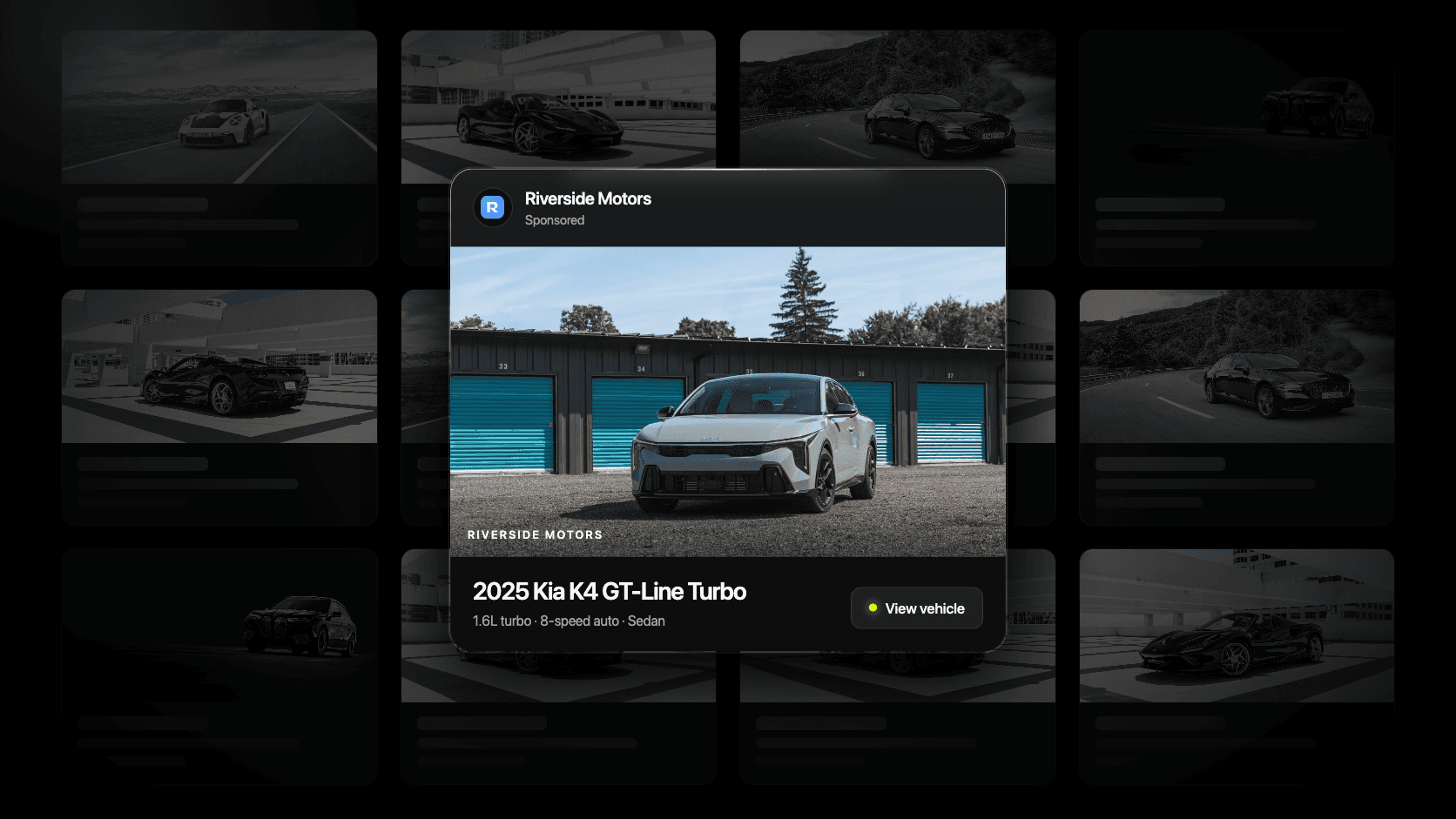
This is the route Meta built for dealerships. Automotive inventory ads are a catalog-based ad format for automotive businesses. Meta describes them as using your vehicle catalog, the Meta Pixel on your website, and people’s activity on Meta’s apps to show your vehicles to the most relevant shoppers. You set up the campaign once, and it can promote your whole inventory without building each ad by hand.
Where they can appear matters here. Meta’s list of supported placements for automotive ads includes Facebook Marketplace, alongside Facebook Feed, Facebook search results, Instagram Feed and Stories, and more. So while a dealership can’t post a free listing on Marketplace, its inventory can still show up there as an ad.
Shoppers who click can go to your website, or to vehicle details on your Facebook Page.
What you need to run them
Meta’s catalog setup guide lays out the pieces:
- A vehicle catalog. Create a catalog in Commerce Manager and choose the Auto type, then Vehicles.
- Your inventory in that catalog. Add a data feed with your vehicles and the required fields. Feeds can update hourly, daily or weekly, so prices and availability stay current.
- Product sets (optional). Group vehicles, such as all SUVs, to control which ones appear in a campaign.
- A Meta Pixel or SDK connected to the catalog. This is what lets Meta show shoppers the vehicles they looked at, or ones like them.
That last step depends on your website. The ads work best when your vehicle pages and your catalog describe the same inventory, with the same photos, prices and details.
Option 3: Your Facebook Page
Your dealership’s Page doesn’t get a Marketplace tab anymore, but it still matters. It’s where shoppers check that you’re real, read about your store, and see what’s new on the lot. Regular posts about fresh arrivals keep it active, even though Page posts are not Marketplace listings.
Which option fits an independent dealer?
- If you want free exposure and have salespeople willing to post, personal listings can work. Treat them as a supplement, keep them accurate, and know the risks are tied to individual accounts.
- If you want your inventory on Marketplace in a way the dealership controls, automotive inventory ads are the supported way to do it. They cost ad spend, and they need a catalog feed and a Pixel to work well.
- Either way, a current inventory feed, good photos and a website that can turn a click into a conversation do most of the work.
Where Dealer Shock helps
Dealer Shock doesn’t post to Marketplace for you, and nothing gets a dealership around Meta’s rules. What we help with are the pieces the supported routes depend on.
Inventory management keeps your vehicles in one place. Detailed VIN decoding fills in vehicle information, custom photo overlays put your brand on every image, and AI vehicle descriptions give each listing a useful introduction. Inventory syndication exports your listings to the providers you use, and Facebook is one of them. Automatic social posting turns new arrivals into posts for your Facebook and Instagram, so your Page stays current without another daily task.
Managed Advertising puts your dealership and inventory in front of shoppers on Facebook, Instagram and Google. Inventory ads use a vehicle’s primary photo with your selected overlay, along with its year, make, model and details. Our team plans the campaign around your market and budget, watches performance, and refreshes ads before they go stale. You don’t need a Dealer Shock website to use it.
If Marketplace shoppers are part of your plan, schedule a demo and we’ll walk through how your inventory and advertising could work together.