
A promotion at a small used car lot usually goes like this: a slow week, a banner that says “Sale,” and a hope that someone drives by. Nobody can say whether it worked.
A better promotion has three things: a reason that makes sense to the shopper, a start date early enough to matter, and a way to count what it brought in. This guide covers seasonal offers, events a small lot can actually run, referral and repeat-buyer offers, slogan patterns you can adapt, a note for buy-here-pay-here dealers, and how to measure the results.
For everyday marketing that runs between promotions, see our used car dealership marketing ideas. For what to post while a promotion is running, see our social media post ideas.
Promotions by season
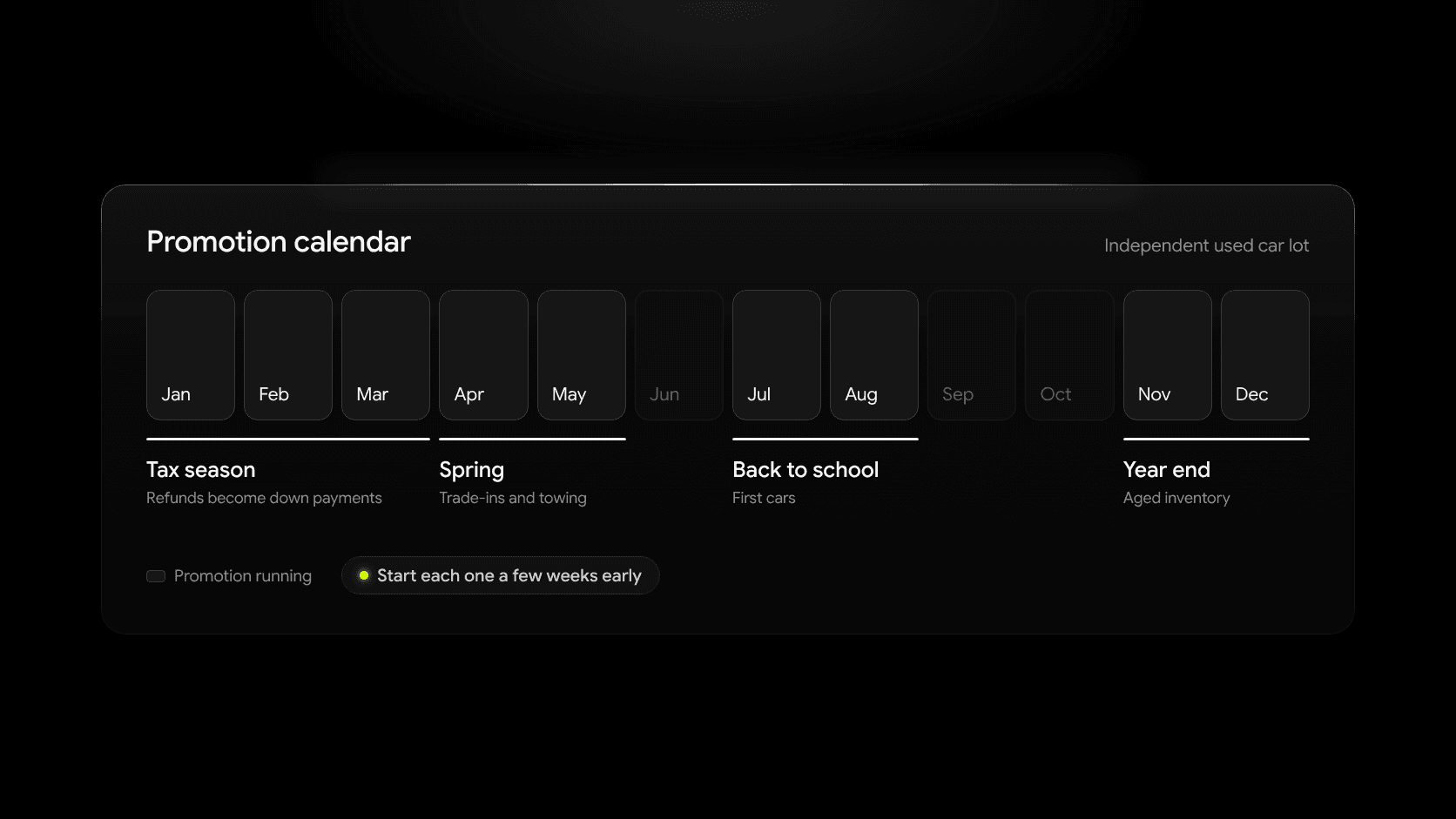
Seasons give a promotion a built-in reason. Shoppers already expect certain things at certain times of year, so you’re working with them instead of against them.
Tax refund season
For many used car buyers, a tax refund is the down payment. That makes the weeks around refunds one of the most important stretches of the year for an independent lot.
- What to offer: Make the refund easy to use. Help with paperwork, a clear explanation of how a down payment changes the deal, and a “bring your refund, leave with a car” message that stays honest about approval.
- Inventory: Stock the price range your refund shoppers actually buy in, not the trucks you wish you could sell.
- When to start: In January, before refunds arrive. Shoppers start planning as soon as they file, and you want to be the lot they already know when the money lands.
Spring
Warmer weather brings people back outside and onto lots. It’s also when people look at the car that barely made it through winter.
- What to offer: A trade-in push. “Get a written offer on your trade, no purchase required” gives people a low-pressure reason to visit.
- Inventory: Convertibles, trucks, and anything that tows a boat or a camper.
- When to start: Late February or early March, so the message is in place before the first warm weekend.
Back to school
Families shop for a teenager’s first car, a college student’s commuter, or a bigger vehicle for school runs.
- What to offer: A first-car or student promotion: a free basic maintenance lesson at delivery, a set of floor mats, or a first oil change on you. Keep the offer small and real.
- Inventory: Reliable, affordable sedans and small SUVs with a clean history.
- When to start: Early July. Many families decide well before school starts.
Year end
The last weeks of the year are when you clear aged units and set up the next year.
- What to offer: An aged-inventory event with specific vehicles and specific prices, rather than a vague “everything must go.” A holiday gift-card-with-purchase offer works too.
- Inventory: Vehicles that have sat longest, plus anything that suits winter driving where you are.
- When to start: Early November, so the promotion isn’t competing with every other holiday message in December.
Events a small lot can run
You don’t need a tent sale and a radio remote. A small event with a clear purpose often does more, and it gives you something real to post about.
- Customer appreciation day. Invite past buyers for food, a free car wash, and a raffle. Past customers bring friends, and friends are the warmest leads you’ll ever get.
- Community or charity tie-ins. Host a school fundraiser, a food drive, or a coat drive on your lot. Pick a cause your team actually cares about and keep the sales pitch low. People remember who showed up for their town.
- First-time-buyer evening. A weeknight session on how buying a used car works: what to bring, how financing and credit are reviewed, what a vehicle history report shows, and what “as is” means. Keep it educational and serve coffee. Attendees who buy later already trust you.
- Cars and coffee. A Saturday morning meetup for local car people, with your lot as the host. It isn’t a sales event, and it shouldn’t feel like one. It puts your name in front of enthusiasts who influence what their friends and family buy.
Whatever you run, collect names and phone numbers with permission, so you can follow up afterward.
Referral and repeat-buyer offers
Your past customers are the cheapest source of your next sale. Give them a reason to send someone your way.
- A referral reward. A gift card or cash reward when someone they send buys a vehicle. Check your state’s rules on referral payments before you set the amount.
- A repeat-buyer offer. A loyalty bonus on the next trade-in, or a set amount off a next purchase within a set period.
- Make it easy to pass along. Hand every buyer two referral cards at delivery, and send a short text a few weeks later with a link they can forward.
- Thank people either way. A thank-you note to someone whose referral didn’t buy keeps them sending more.
Used car sales slogans
A good slogan says one true thing about your lot, in words a customer would repeat. Most work comes from a few patterns:
- The promise: what shoppers can count on.
- The local: where you are and who you serve.
- The process: how buying from you feels.
- The person: who they’re dealing with.
Here are ten original examples to adapt:
- “Every car inspected. Every answer straight.”
- “Your neighbors bought here first.”
- “Small lot. Real people. Fair deals.”
- “We drive it before you do.”
- “Know the price before you pull in.”
- “Local since day one, and still answering our own phone.”
- “First car, next car, family car.”
- “Trade in, drive out, no runaround.”
- “The lot that gets the second visit.”
- “Good used cars, sold by people who’ll still be here.”
Keep slogans truthful. “Every car inspected” is only a slogan if every car is inspected. Avoid claims you can’t back up, like “lowest prices in town,” and avoid financing promises like “everyone approved” unless they’re literally true.
A note on advertising rules
Promotions mean prices, “sale” claims, and sometimes financing offers, and all of those are advertising. Advertised prices, discounts, and financing terms must follow FTC and state advertising rules. The FTC’s Automobile Industry Pricing Transparency FAQs explain how the agency’s staff views advertised prices, required fees, and discounts. This isn’t legal advice. Have someone who knows your state’s rules review a promotion before it runs.
For buy-here-pay-here lots
Buy-here-pay-here promotions work best when they focus on what makes in-house financing different: you look at more than a credit score.
- Lead with the process, not the payment. “Bring your last two pay stubs and a proof of address” is clearer, and safer, than a monthly payment in a headline.
- Promote on-time payment rewards. An oil change or gift card after a set number of on-time payments is a reason to stay current and a reason to come back.
- Run a “second chance” information night. Explain how your financing works and what customers can expect, with no pressure to buy that evening.
- Be careful with approval claims. Words like “guaranteed” have to be true for every applicant.
How to measure a promotion
A promotion that “felt busy” isn’t the same as one that sold cars. Track three numbers for every promotion:
- Leads: calls, texts, form fills, and walk-ins that mention the promotion. Use a phrase shoppers can say or a code on a form, so you know where each one came from.
- Appointments: how many of those leads came to the lot.
- Sales: how many bought, and what gross the deals carried.
Then compare those numbers with the same weeks last year, not the weeks before. Comparing tax season with the slow stretch before it tells you about the season, not the promotion. If you don’t have last year’s numbers, start keeping them now. Next year’s comparison depends on it.
If you’re putting ad spend behind a promotion, our car dealership advertising ideas cover where that money tends to go furthest.
We make Dealer Shock, so weigh this accordingly: if your website isn’t ready to send promotion traffic to, we’ll build a free website preview of your dealership within 24 hours.
Frequently asked questions
What are good car dealership promotion ideas for a small lot?
Tie promotions to seasons shoppers already care about: tax refund season, spring, back to school, and year end. Add one small event, such as a customer appreciation day or a first-time-buyer evening, and a referral reward for past customers.
What are the best used car promotion ideas for tax season?
Start in January, before refunds arrive. Make it simple to use a refund as a down payment, stock the price range refund shoppers buy in, and keep every approval and financing claim accurate.
What are good car dealership event ideas?
Customer appreciation days, charity or community tie-ins, a first-time-buyer evening, and a cars-and-coffee meetup all work for independent lots. Keep the sales pitch low, collect contact details with permission, and follow up after the event.