
Starting a car dealership is less about one big decision and more about a dozen smaller ones made in the right order. You can’t get a dealer license without a location. You can’t buy at dealer auctions without a license. You can’t sell what you bought without insurance, a way to handle titles and paperwork, and a way for shoppers to find you.
This guide walks through how to start a used car dealership in that order: the business, the license, the bond, the lot, the money, the inventory, the back office, and the marketing. Rules and costs vary by state, so treat this as a map and your state’s licensing agency as the final word.
1. Decide what kind of dealership you’re opening
Before you file anything, decide what you’ll sell and to whom. That choice shapes your license type, your location, and how much money you need.
- Retail used car lot. You sell to the public from a display lot. This is what most people mean by “opening a car lot,” and it’s what this guide covers.
- Wholesale-only dealer. You buy and sell to other dealers, not the public. Many states license this separately and with lighter location requirements. California, for example, doesn’t require a display area for wholesale-only dealers.
- Buy here, pay here. You sell and finance the vehicle yourself. This adds lending rules, collections, and much more capital on top of everything below.
- New car franchise. Selling new vehicles requires a franchise agreement with a manufacturer. That’s a different path, and most first-time dealers start with used vehicles.
Then write a simple business plan. It doesn’t need to be long, but it should answer: what price range and vehicle types you’ll focus on, who your buyers are, how many vehicles you’ll keep on the lot, where you’ll buy them, and how many months you can cover rent, payroll, and floor plan interest before sales catch up. Lenders and floor plan companies will ask for these numbers anyway.
2. Form the business and get your tax IDs
Most states ask for proof of your business entity with your dealer application. Choose a structure (an LLC is common, but ask an accountant or attorney what fits you), register it with your Secretary of State, and get an EIN from the IRS.
You’ll usually also need a state sales tax or resale permit so you can collect sales tax on retail sales. California lists a CDTFA seller’s permit among its dealer license requirements, and Florida asks for a sales tax number from its Department of Revenue.
3. Get your dealer license
In nearly every state, you need a dealer license to sell more than a handful of vehicles a year. Most states run licensing through the DMV or a similar motor vehicle agency, though not all: in Georgia, used car dealers are licensed through the Secretary of State.
The process usually includes:
- Pre-licensing education. California, Texas, Florida, and Georgia all require an approved course before you apply, and California adds a written exam.
- An application and fee. Fees vary widely by state.
- Fingerprints and a background check for owners and officers.
- A qualifying business location, often with photos and an inspection.
- A surety bond and, in some states, proof of insurance.
We cover the full process, with official examples from several states, in how to get a dealer license.
4. Get your dealer bond
Most states require dealers to carry a surety bond. The bond protects customers if a dealer fails to deliver a title or commits fraud. It isn’t insurance for you.
The required bond amount is set by each state. A few examples from official sources:
- California: $50,000 for a dealer, under Vehicle Code section 11710.
- Texas: $50,000 for most independent dealers.
- Georgia: $35,000 for used motor vehicle dealers.
- Florida: $25,000, or an irrevocable letter of credit.
You don’t pay the full bond amount. You pay a surety company a premium, and that premium depends largely on your credit and the bond amount. Get quotes from a few bond agencies before you apply.
5. Find a location that passes zoning and licensing rules
Your location has to satisfy two sets of rules: your city or county’s zoning code and your state’s dealer licensing rules. Check both before you sign a lease.
Zoning. Call your local planning or zoning office and ask whether vehicle sales are allowed at the address you’re considering. Many states make this part of the application. Florida’s application requires you to meet local zoning requirements, Georgia’s includes a zoning certification, and Texas asks for proof that local zoning requirements are met.
State location rules. These differ, but they tend to cover the same things:
- A permanent office. Texas requires an office of at least 100 square feet with a desk and at least two chairs. California requires an established office, not a temporary or mobile one.
- A display area. Texas requires space to display at least five vehicles.
- A permanent business sign. Texas specifies that signs must be durable and can’t be banners.
- Records kept on site and available for inspection.
Get a written lease that names the business and the address exactly as they’ll appear on your application. Some states ask for a copy.
6. Line up floor plan financing
Few new dealers buy their first inventory with cash alone. A floor plan is a line of credit used specifically to buy vehicles for resale. The lender pays for the vehicle at auction or from a seller, and you pay back that vehicle’s balance, plus interest and fees, when it sells.
A few things to understand before you sign:
- Curtailments. If a vehicle sits too long, many floor plans require you to pay down part of its balance on a schedule, whether it has sold or not.
- Audits. Lenders check that every financed vehicle is on your lot or accounted for.
- Fees and interest add up. Floor plan costs are one reason aged inventory is so expensive. The faster a vehicle sells, the less it costs you to own.
Floor plan companies usually want to see your dealer license, business plan, and financial statements, so start these conversations while your license application is in process.
7. Get insurance
Even where the state doesn’t require it, a dealership needs insurance that covers the vehicles you own and the people who drive them.
Ask an agent who works with dealers about:
- Garage liability, which covers your business operations and test drives. Florida requires it, with at least $25,000 of combined single-limit coverage and $10,000 of personal injury protection, and Georgia asks for a certificate of insurance with its application.
- Dealer’s open lot coverage, which covers your inventory against damage, theft, or weather.
- General liability, property, and workers’ compensation as your business requires.
8. Source your inventory
Your first inventory sets the tone for your lot, so buy the vehicles your business plan says you’ll sell, not just whatever is cheap that week.
Dealer auctions. Wholesale auctions such as Manheim are a primary source of inventory for independent dealers, and they sell to licensed dealers. Manheim enrolls new dealerships through AuctionACCESS, so plan to register once your license is issued. Many auctions also offer online bidding.
Other sources:
- Trade-ins from your own retail customers.
- Private sellers who want a quick, simple sale.
- Other dealers, including franchise stores wholesaling trade-ins they don’t want to retail.
- Fleet and lease returns.
Before buying, set a maximum price that leaves room for reconditioning, transport, auction fees, and your margin. Run a vehicle history report on anything you’re serious about.
9. Set up your back office and compliance
Every sale creates paperwork: title work, registration, sales tax, disclosures, and, if you arrange financing, lender documents. A dealer management system (DMS) keeps that in one place. Most DMS products handle deal structuring, forms, title and registration tracking, accounting, and reporting. Ask any provider how it handles your state’s forms before you commit.
A few federal rules apply to used car dealers everywhere:
- The FTC Used Car Rule requires a Buyers Guide window sticker on each used vehicle you offer for sale. It applies in every state except Maine and Wisconsin, which have their own similar rules. The FTC’s dealer guide explains what to post and when.
- The FTC Safeguards Rule covers how you protect customer financial information if you arrange financing.
- Federal odometer disclosure rules apply when you transfer ownership.
Your state will add its own rules on advertising, contracts, and temporary tags. Many states require continuing education to renew a dealer license, which is a good way to stay current.
10. Set up your website and inventory before opening day
Shoppers look you up before they drive over. If your first customers search for your dealership and find nothing, or a placeholder page, you’ve lost them before they ever see the lot.
Plan your online presence alongside your license, not after it:
- Claim your Google Business Profile with your exact business name, address, phone number, and hours.
- Launch a website that shows your inventory, your location, your hours, and a clear way to contact you or apply for financing.
- Load your first vehicles with full photo sets and real descriptions so the site has something to show on day one.
- Decide how you’ll handle leads, so every inquiry gets a same-day reply from a named person.
This is the part of opening a dealership Dealer Shock handles. We build and launch dealer websites for independent and used car dealers with no setup fees, so you can have a site live with your inventory before your doors open. Your site includes inventory importing and syncing, an inventory management dashboard, and lead management for finance applications, test drive requests, trade-ins, and vehicle inquiries. If you don’t have a logo yet, the Performance plan includes logo creation, along with custom website imagery and branded overlays for your vehicle photos. See pricing for what each plan includes.
Once you’re open, Managed Advertising can plan and run inventory and creative ads on Facebook, Instagram, and Google around your market and budget.
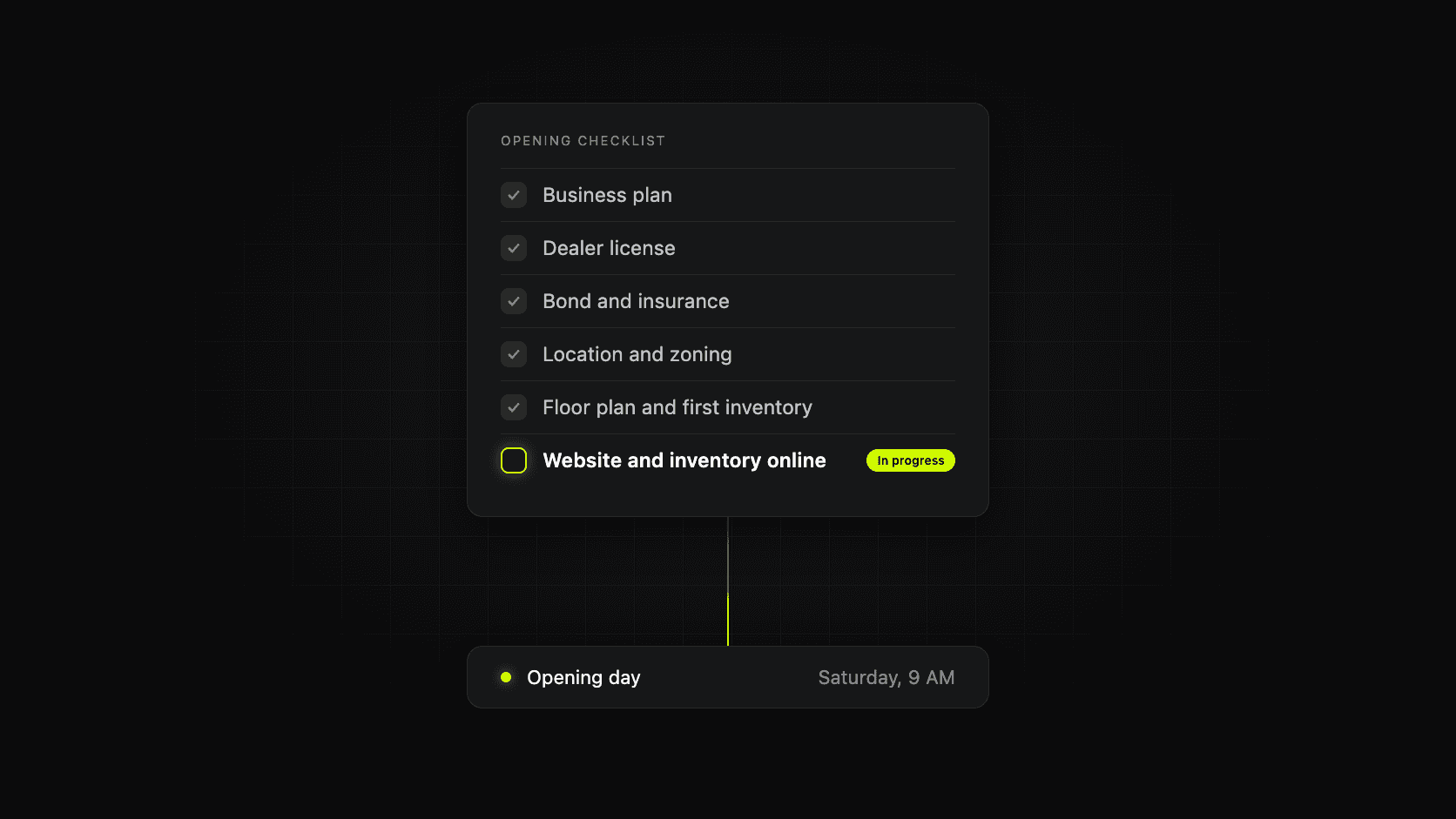
A simple opening checklist
- Choose your dealership type and write a business plan.
- Form your business, get an EIN, and register for sales tax.
- Find a location and confirm zoning before signing a lease.
- Complete your state’s pre-licensing course and any exam.
- Get your surety bond and insurance quotes.
- Submit your dealer license application, fingerprints, and location photos.
- Arrange floor plan financing.
- Register for dealer auctions once your license is issued.
- Set up your DMS, Buyers Guides, and deal paperwork.
- Launch your website and Google Business Profile, and load your first inventory.
The order matters less than starting the slow steps early. Licensing, location approval, and financing all take time, so begin them in parallel and work on your marketing while you wait.